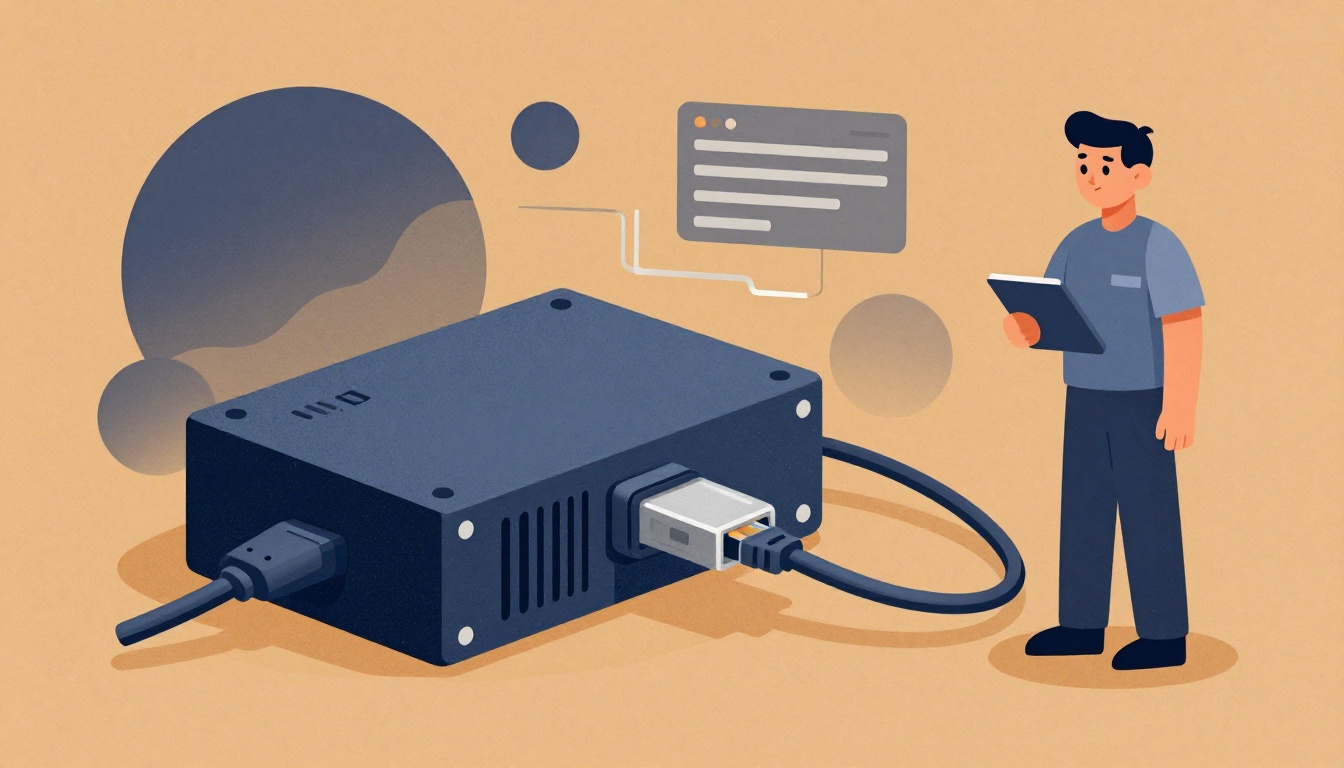
If your fleet still runs on legacy ECUs that speak older protocols like SAE J1708 or J1587, you might think modern telematics is out of reach. But with the right gateway hardware, you can bridge that gap and bring real-time data, remote diagnostics, and over-the-air (OTA) firmware updates to your existing equipment without replacing the entire control system.
Which protocol is commonly used by legacy ECUs in heavy equipment that requires a gateway for telematics integration?
Select one answer.
Understanding the protocol barrier
Legacy ECUs in heavy equipment often communicate over SAE J1708 (a serial bus using the J1587 data protocol) or early CAN-based networks. Modern telematics control units (TCUs) and fleet management platforms expect data over SAE J1939 (CAN bus) or Ethernet. The core challenge is translating between these protocols. As noted by Copperhill Technologies, "bridging these two standards is essential when retrofitting dashboards, ECUs, or fleet monitoring devices" source.
The three-layer telematics architecture
A modern telematics ECU gateway operates in three layers, as described by embedded systems expert Srinivas Mishra source:
- Network Interface Layer – Handles cellular (4G/5G), Wi-Fi, Bluetooth, GNSS, and V2X communication.
- Communication Middleware – Manages networking stacks (TCP/IP, MQTT), encryption, session management, and data routing.
- Vehicle Integration Layer – Connects to the vehicle's internal CAN, Ethernet, or J1708 bus.
When retrofitting a legacy ECU, you're essentially inserting a gateway device between the old network (layer 3) and the new telematics unit (layers 1 and 2).
Gateway solutions for legacy ECUs
Several commercially available gateways can translate J1708/J1587 messages into J1939-compatible outputs. For example, the Axiomatic AX140400 Protocol Converter is an isolated J1587–J1939 gateway built for harsh engine bay environments, featuring two isolated CAN 2.0B ports and one isolated RS-485 port source. These devices are designed for in-vehicle fleet retrofits and support bidirectional data flow.
Step-by-step retrofit checklist
Follow these steps to integrate telematics with your legacy ECUs:
- Identify your legacy protocol – Confirm whether your ECU uses SAE J1708/J1587 or an early CAN implementation.
- Select a compatible gateway – Choose a rugged, IP-rated protocol converter (e.g., J1708-to-J1939) that matches your vehicle's environment.
- Install the gateway – Mount it near the ECU or in the cab, connecting to the existing J1708 bus and the new telematics unit.
- Configure data mapping – Use the gateway's configuration tool to map J1587 parameters (e.g., engine RPM, coolant temperature) to J1939 PGNs.
- Connect the telematics unit – Wire the gateway's CAN output to your TCU or aftermarket telematics device.
- Validate data flow – Use a J1939 monitor (like JCOM1939) to verify that translated messages are being received correctly.
- Enable remote diagnostics – Once data reaches the cloud, set up dashboards for real-time monitoring and fault code alerts.
- Plan for OTA updates – Ensure your telematics platform supports remote firmware updates for the gateway and connected ECUs.
Benefits of retrofitting vs. replacing
Retrofitting with a gateway is often more cost-effective than replacing the entire ECU. It preserves your existing investment in hardware and wiring while unlocking modern capabilities like:
- Real-time GPS tracking and geofencing
- Remote diagnostics and fault code reading
- Predictive maintenance alerts
- Fuel consumption monitoring
- OTA firmware updates for the telematics unit itself
As the Renesas blog notes, an integrated telematics gateway enables "seamless connectivity, remote diagnostics, and OTA firmware updates" source.
Quiz: Test your knowledge
Which protocol is commonly used by legacy ECUs in heavy equipment that requires a gateway for telematics integration?
- SAE J1708/J1587
- SAE J1939
- OBD-II
How the Resident Expert Can Help
If your legacy ECUs need repair or diagnostics before you can integrate telematics, RE-CLICK specializes in electronic control repair for heavy equipment, including control circuit boards, joysticks, and sensors. Their certified technicians provide nationwide support to reduce downtime and extend equipment life, helping you prepare your fleet for modern connectivity.