
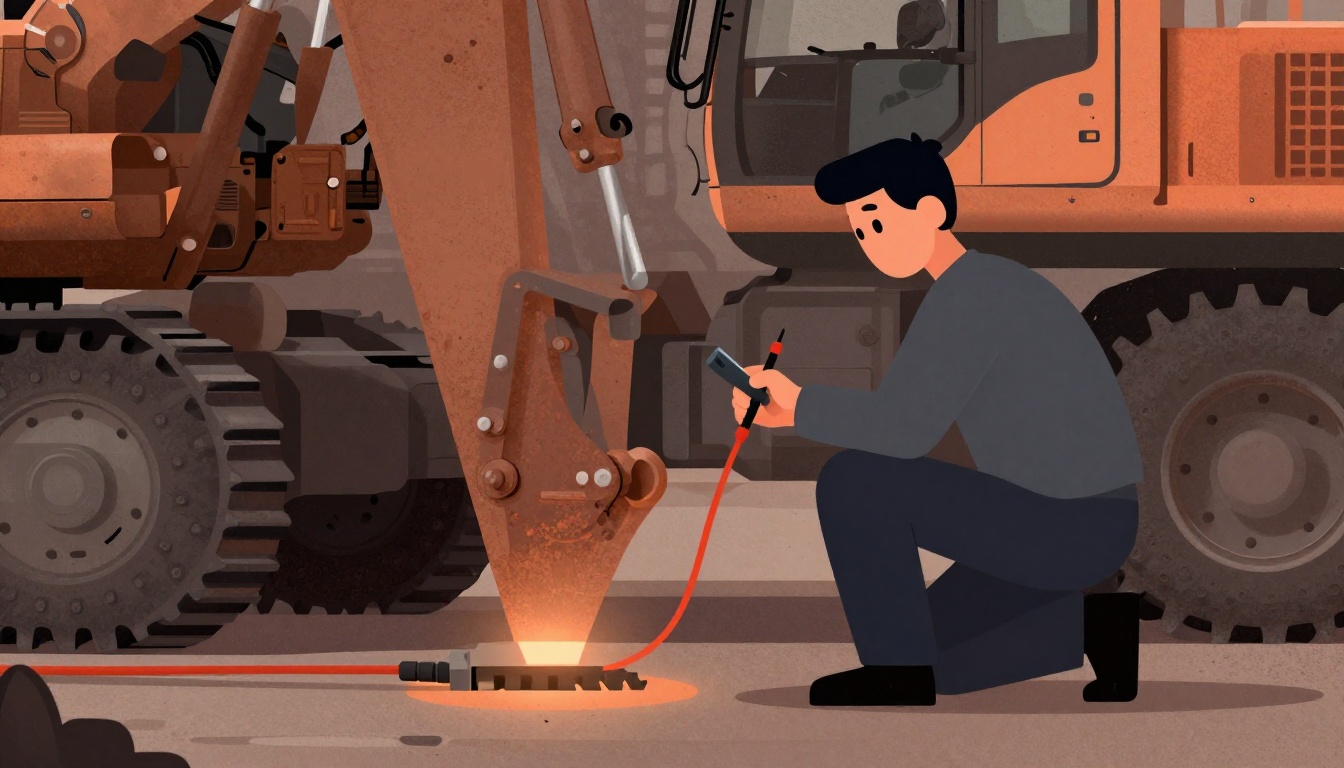
When a joystick goes dead or an ECU throws a fault code, the first suspect is often the component itself. But in many cases, the real culprit is a faulty ground connection. A poor ground can cause erratic sensor readings, intermittent shutdowns, and even permanent damage to electronic controls. This guide shows you how to identify and fix ground issues before they cost you hours of downtime.
What is the most reliable way to test a ground connection under load?
Select one answer.
What a ground fault looks like
A ground fault occurs when electrical current leaves its intended path and flows directly to ground, often through a chassis, conduit, or earth (Trystar). In heavy equipment, this can happen due to insulation breakdown, moisture intrusion, or mechanical damage (Quad Plus). The result is often a low-magnitude fault that doesn't trip breakers but still disrupts sensitive electronics.
Unlike a short circuit—which is a sudden, massive current spike—a ground fault is more like a slow leak. It may not be enough to trip a standard overcurrent device, but it can energize the entire chassis, creating a shock hazard and causing intermittent malfunctions (E&I Sales).
Why ground connections fail in heavy equipment
Heavy equipment operates in harsh environments. Dirt, moisture, vibration, and temperature extremes all take a toll on ground connections. Corrosion at the bonding point, loose bolts, and paint that wasn't removed properly are common culprits (RVelectricity). Even a small amount of rust can create enough resistance to disrupt low-voltage signals.
Step-by-step diagnosis
Follow these steps to identify a faulty ground connection:
-
Visual inspection – Look for loose, corroded, or broken ground straps and cables. Check where the ground wire connects to the chassis or battery. Remove any paint, rust, or debris to ensure a clean metal-to-metal contact.
-
Voltage drop test – With the equipment running, use a multimeter to measure voltage between the ground terminal of the component and the battery negative terminal. A reading above 0.1 volts indicates excessive resistance in the ground path. This test is more reliable than a simple continuity check because it tests under load.
-
Insulation resistance test – Use a megger to test the insulation of suspect circuits. This can reveal degraded insulation that only fails under stress, such as when the machine heats up or vibrates (Towery Electric).
-
Ground bond test – For a quick check, use a 12-volt test light connected to battery positive. Touch the probe to the ground point—it should light brightly. If it's dim or flickers, there's a poor connection (RVelectricity).
-
Load testing – If possible, apply a load to the circuit and monitor voltage. A weak ground will show voltage drop under load but may appear fine when idle.
Tools you need
- Digital multimeter with good resolution (millivolt range)
- Insulation resistance tester (megger)
- 12-volt test light (incandescent type)
- Wire brush or grinder for cleaning contact points
- Dielectric grease for protecting connections
Preventing ground faults
Regular maintenance is your best defense. Include ground connections in your preventive maintenance checklist. Clean and tighten all ground points at least annually, or more often in wet or dusty conditions. Apply dielectric grease to protect against corrosion. When replacing components, always verify the ground path is solid before installing the new part.
When to call a professional
If you've followed these steps and still have intermittent issues, it may be time for professional diagnostics. Faulty grounds can be tricky, especially when they're intermittent or involve multiple ground references. A specialist with the right test equipment can isolate the problem faster and get you back to work.
How the Featured Expert Can Help
RE-CLICK specializes in electronic control repair and diagnostics for heavy equipment, including joysticks, ECUs, and sensors. Their certified technicians provide nationwide support to reduce downtime and extend equipment life. If you're dealing with stubborn ground issues or need a component repaired, call RE-CLICK for fast, reliable service.
Quiz: What is the most reliable way to test a ground connection under load?
- Visual inspection
- Voltage drop test
- Continuity check
Correct answer: Voltage drop test (index 1)