
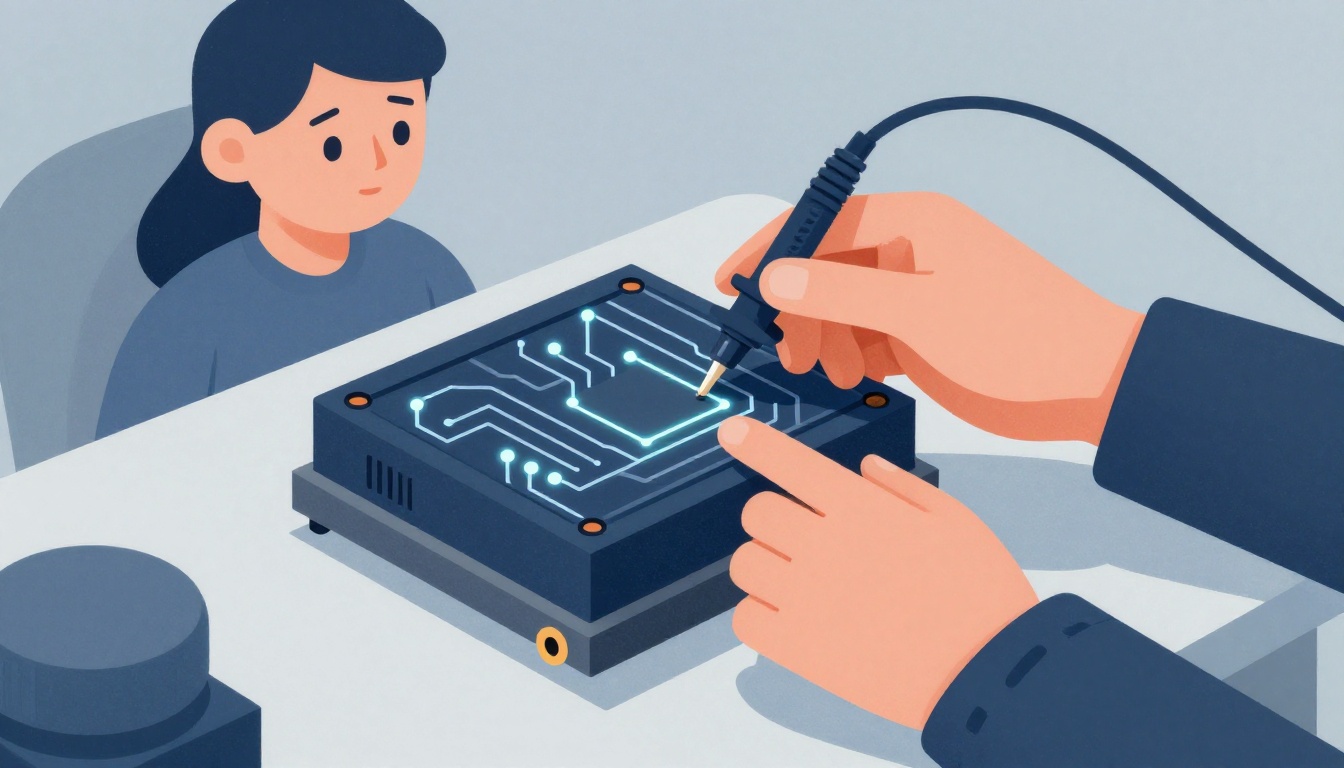
When a mobile ECU fails to power up or behaves erratically, the root cause is often a simple power supply fault rather than a failed control module. Before replacing the ECU, a systematic check of its power and ground circuits can save you hours of downtime and hundreds of dollars in unnecessary parts.
What is the most common type of ECU fault according to industry data?
Select one answer.
Why power supply faults are the most common ECU failure
According to industry diagnostic data, power supply circuit failures are the most frequent type of ECU fault. Surge voltages can damage surface-mount capacitors, resistors, diodes, and even burn PCB traces around critical ICs. These failures often stem from environmental factors, voltage overloads, or improper handling during jump-starts or battery swaps.
Step-by-step diagnostic procedure
1. Visual inspection first
Start with a thorough visual check of the ECU connector, wiring harness, and nearby fuses. Look for corroded pins, bent terminals, melted insulation, or signs of water ingress. Water damage is a common cause of intermittent power issues.
2. Check battery voltage at the ECU
With the ignition OFF, use a digital multimeter set to DC volts. Measure between chassis ground and each ECU power pin identified in your wiring diagram. You should read battery voltage (typically 12.6V or higher on a healthy battery). A reading below 12V may trigger fault codes or prevent the ECU from powering up.
3. Verify key-on power
Turn the ignition ON (engine off) and repeat the measurement. Many ECUs have a dedicated ignition-switched power pin. If voltage is missing here, trace back to the ignition relay and fuse. A blown fuse or failed relay is a quick fix.
4. Test ground circuits
Set your multimeter to ohms (Ω) and measure between each ECU ground pin and a known good chassis ground. Resistance should be near zero. High resistance indicates a corroded or loose ground connection, which can cause erratic behavior or no-start conditions.
5. Check for voltage drop under load
With the ignition ON and all accessories off, measure voltage at the ECU power pin while someone cranks the engine. A voltage drop below 10V during cranking suggests a weak battery, poor connection, or undersized wiring.
Common symptoms of power supply failure
- ECU does not power up (no LED, no communication with diagnostic tool)
- Intermittent shutdowns or resets during operation
- Fault codes related to low voltage or power supply
- Engine cranks but won't start (ECU not receiving power to fire injectors)
When to suspect internal ECU damage
If all external power and ground circuits check out but the ECU still fails to operate, the fault may be internal. Common internal failures include:
- Blown protection diodes or capacitors from voltage spikes
- Corrupted memory from surge voltages during operation
- Failed output power modules that drive injectors or solenoids
In these cases, professional bench testing and repair are required.
Preventative measures
- Always disconnect the battery before performing electrical work
- Use a surge protector or battery disconnect switch during jump-starts
- Keep connectors clean and dielectric grease applied
- Regularly inspect wiring harnesses for chafing or corrosion
How the Featured Expert Can Help
If you've followed these steps and still have a non-functional ECU, RE-CLICK offers specialized electronic control repair and diagnostics for heavy equipment. Their certified technicians can bench-test your ECU, joystick, or sensor and provide fast turnaround to minimize downtime. Call them for nationwide support.
Quiz: Test your knowledge
What is the most common type of ECU fault according to industry data?